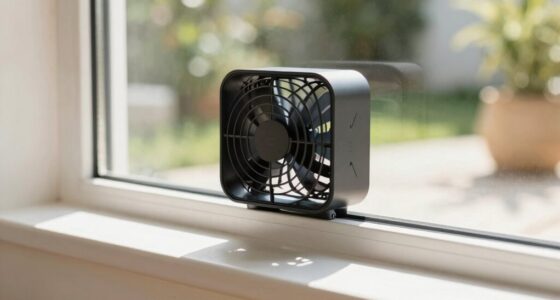

To get the most out of a whole-house fan, you need to shift your focus from upfront costs to long-term benefits like energy savings and improved indoor air quality. It’s about understanding that proper installation, sizing, and integration with your home’s design are key to maximizing efficiency and comfort. This long-term perspective helps you see it as a sustainable, smart upgrade rather than just an expense. Keep exploring to discover how this mindset can make a difference.
Key Takeaways
- Buyers should prioritize long-term energy savings and environmental benefits over initial costs.
- Proper installation, sizing, and placement are essential for maximizing efficiency and comfort.
- Viewing the upgrade as an investment enhances its perceived value and sustainability.
- Compatibility with existing home design and ventilation systems influences performance and effectiveness.
- Focusing on eco-friendly, cost-effective choices aligns with sustainable living goals.
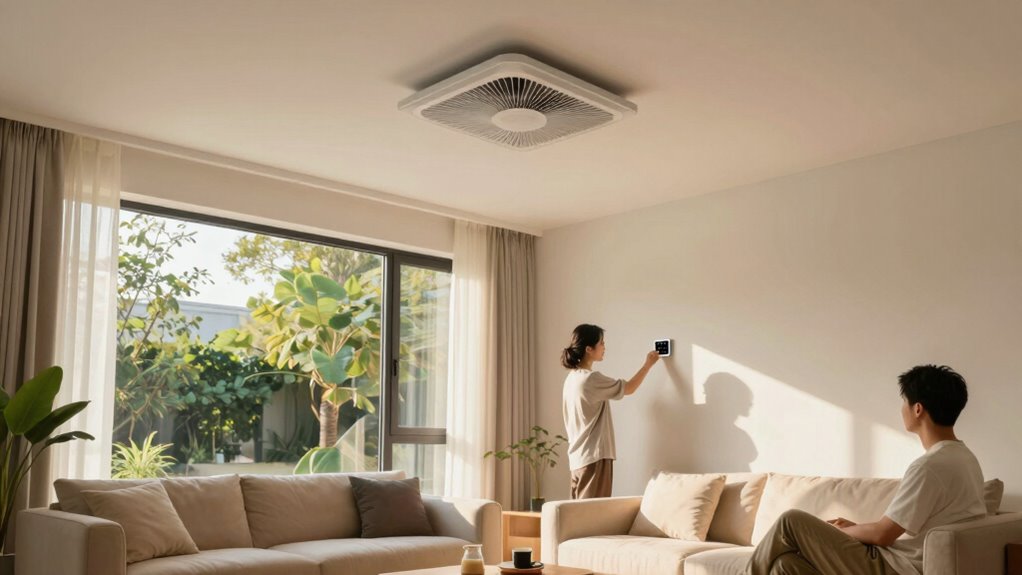
When considering a whole-house fan, understanding your buyer mindset is essential to making an informed decision. These fans are different from traditional air conditioning units, and they require a shift in how you evaluate their value. Instead of focusing solely on initial costs, you need to think about long-term benefits like energy efficiency and comfort. Whole-house fans are designed to improve ventilation, reduce energy bills, and create a healthier indoor environment. But to truly appreciate their advantages, you must approach the purchase with a different mindset—one that emphasizes energy savings and the ease of the installation process.
Energy efficiency is a primary reason many homeowners turn to whole-house fans. Unlike air conditioners that run constantly, these fans use significantly less electricity to cool your home naturally. When you’re in the market for one, you should consider how much you’ll save on energy bills over time. This shift in perspective means valuing the long-term cost benefits rather than just the upfront price tag. Whole-house fans can cut cooling costs, especially in moderate climates or during shoulder seasons, making them an eco-friendly choice. Your focus should be on how much more efficient your home can become by integrating a whole-house fan into your cooling strategy.
Prioritize long-term savings and energy efficiency when choosing a whole-house fan for a more sustainable home.
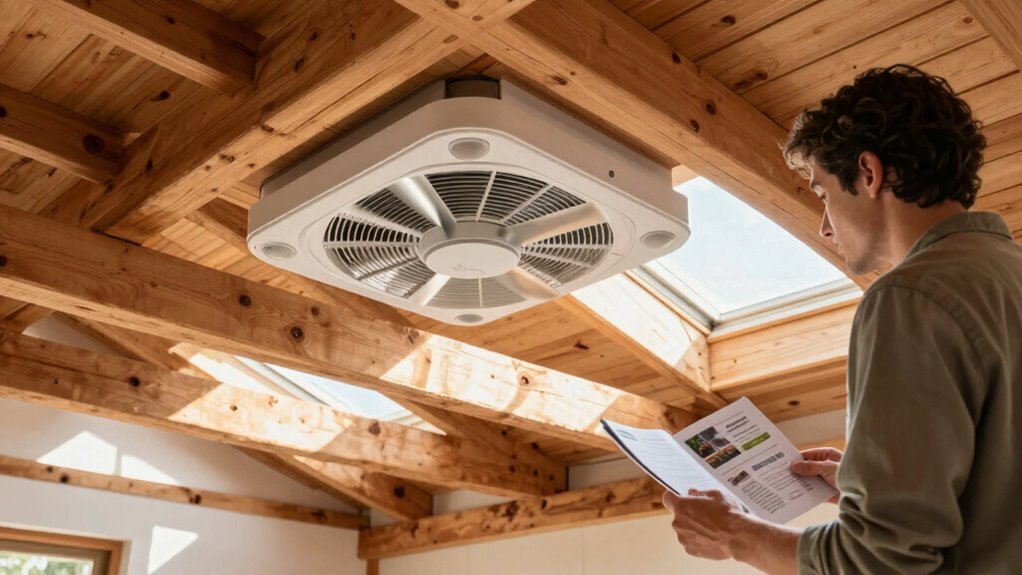
The installation process is another factor that needs a different mindset. Many buyers might assume installing a whole-house fan is complicated or disruptive. But understanding that the process is generally straightforward can help you approach the purchase with confidence. Most installations involve mounting the fan in your attic and creating a controlled intake and exhaust system. Knowing this, you can plan for a smooth, relatively quick installation, often handled by professionals. This understanding shifts your perspective from viewing it as an invasive renovation to seeing it as a manageable upgrade that adds value to your home. Additionally, considering home ventilation systems can help you better evaluate how a whole-house fan integrates into your existing home design. Recognizing that proper sizing and placement are crucial for maximizing benefits is part of adopting this new buyer mindset.
Furthermore, recognizing that the right mindset involves considering the long-term benefits rather than just the initial cost helps you prioritize quality and compatibility with your home’s design. Whole-house fans require proper sizing and placement to maximize energy efficiency and comfort. Once you grasp that the installation process is manageable and that the long-term savings outweigh the upfront investment, you’re more likely to see this upgrade as a smart, sustainable choice. Developing this long-term perspective can also encourage you to explore other sustainable home improvements that contribute to an eco-friendly lifestyle. Being aware of energy-efficient home upgrades can help you make more informed decisions about your entire home’s sustainability. Emphasizing cost savings over time can transform your approach to home comfort upgrades, making sustainable choices more appealing and worthwhile. Approaching your purchase with this mindset ensures you’re making an informed decision that aligns with your eco-conscious goals, budget, and desire for a more comfortable living environment.

Centric Air QA-Deluxe 5500 Whole House Fan | Energy Efficient | Plug & Play, 2 Speed Remote with Temp & Timer Control | R-5 Insulated Damper | Easy Installation | 10-Year Motor Warranty | Made in USA
- Energy Efficient Cooling: Reduces energy use and utility bills
- Remote Control & Timer: Adjust settings remotely with ease
- Quiet Operation: Operates at 51 decibels for peace
As an affiliate, we earn on qualifying purchases.
As an affiliate, we earn on qualifying purchases.
Frequently Asked Questions
Are Whole-House Fans Energy-Efficient Compared to Air Conditioning?
Yes, whole-house fans are energy-efficient compared to air conditioning. They use considerably less energy, leading to substantial energy savings over time. When you compare the cost, a whole-house fan has a lower initial investment and reduced operating costs, making it an economical choice. By using a whole-house fan, you can cool your home naturally, decrease your energy consumption, and enjoy lower utility bills.
How Loud Are Whole-House Fans During Operation?
Whole-house fans are generally quiet during operation, with noise levels typically ranging from 50 to 70 decibels, comparable to a normal conversation. Their sound insulation features help minimize noise, especially if installed properly with soundproofing materials. You might hear some sound as the fan ramps up or down, but overall, they’re designed to operate quietly, ensuring comfort without disturbing your peace or daily activities.
Can Whole-House Fans Be Used in All Climates?
Whole-house fans work best in moderate climates, making climate adaptation essential when considering regional installation. In cooler or humid areas, they might not provide enough cooling or ventilation. If you live in a region with dry, temperate weather, you’ll likely find a whole-house fan effective. However, in extreme heat or high humidity, you should evaluate whether this system suits your climate or if alternative cooling options might be better.
What Maintenance Is Required for Long-Term Durability?
To guarantee long-term durability, follow a regular maintenance schedule that includes cleaning the fan blades and vents to prevent dust buildup. Lubricate moving parts as recommended by the manufacturer, and check for loose connections or wear. Durability tips also include inspecting the motor and electrical components periodically, and replacing worn parts promptly. Staying proactive with maintenance helps your whole-house fan operate efficiently and last for years.
How Do I Choose the Right Size for My Home?
Did you know that a properly sized fan can cut your cooling costs by up to 30%? To choose the right size for your home, consider your home’s size and layout. For larger homes, opt for a higher fan capacity to guarantee efficient airflow. Measure your space accurately and consult manufacturer guidelines to match the fan capacity with your home size, preventing inefficiency or noise issues.

Quietcool QC CL-4700 RF Classic Advanced Whole House Fan with Wireless Control – Up to 4415 CFM – Two Speed – Covers up to 2,208 SQFT – 10 Year Warranty – Removable Grille
- Brand and Model: Quietcool QC CL-4700 RF
- Type: Whole house fan with wireless control
- Airflow Capacity: Up to 4415 CFM
As an affiliate, we earn on qualifying purchases.
As an affiliate, we earn on qualifying purchases.
Conclusion
Adopting the right mindset means understanding that a whole-house fan isn’t just a quick fix—it’s an investment in comfort and energy savings. For instance, imagine a homeowner who initially thought it was a simple upgrade but soon realized it required regular maintenance and strategic use during specific seasons. By shifting your perspective and planning accordingly, you’ll maximize your fan’s benefits, ensuring it truly enhances your home’s comfort and efficiency long-term.
Quietcool QC CL-4700 RF Classic Advanced Whole House Fan with Wireless Control – Up to 4415 CFM – Two Speed – Covers up to 2,208 SQFT – 10 Year Warranty – Removable Grille
- Brand and Model: Quietcool QC CL-4700 RF
- Type: Whole house fan with wireless control
- Airflow Capacity: Up to 4415 CFM
As an affiliate, we earn on qualifying purchases.
As an affiliate, we earn on qualifying purchases.

Quietcool Whole House Fan Wireless Control Kit – No Hard Wiring Required for Wall Switch – Three Speed Capable – 1/2/4/8/12 Hour Countdown Timer – Up to 100ft Range – Batteries Included (Glass)
- Wireless control from anywhere: Control your fan remotely within your home
As an affiliate, we earn on qualifying purchases.
As an affiliate, we earn on qualifying purchases.